
Managing money as a student is not easy. Between tuition fees, rent, transportation, food, subscriptions, and social spending, many students struggle to stay financially stable throughout the month. A small unnecessary expense repeated daily can slowly turn into a major budgeting problem.
The reality is simple: most students are never taught how to manage money properly. Schools often focus on academics but rarely explain how to build savings, track expenses, or create healthy financial habits. As a result, many students enter adulthood without understanding budgeting basics.
At the same time, education and living costs continue to rise. Students today face higher expenses than previous generations, making financial planning more important than ever.
This is where personal finance tools become extremely useful.
Modern budgeting apps, savings calculators, and expense trackers help students monitor spending, reduce unnecessary expenses, and build smarter money habits. Instead of manually writing expenses in notebooks or trying to remember purchases, digital finance tools simplify everything.
Whether you want to stop overspending on food delivery, save money faster, split bills with roommates, or build an emergency fund, the right financial tools can make a huge difference.
In this guide, we’ll explore the best personal finance tools for students, how they work, their benefits, real-life examples, and practical money-saving strategies that can help students improve financial stability faster.
Why Students Need Personal Finance Tools
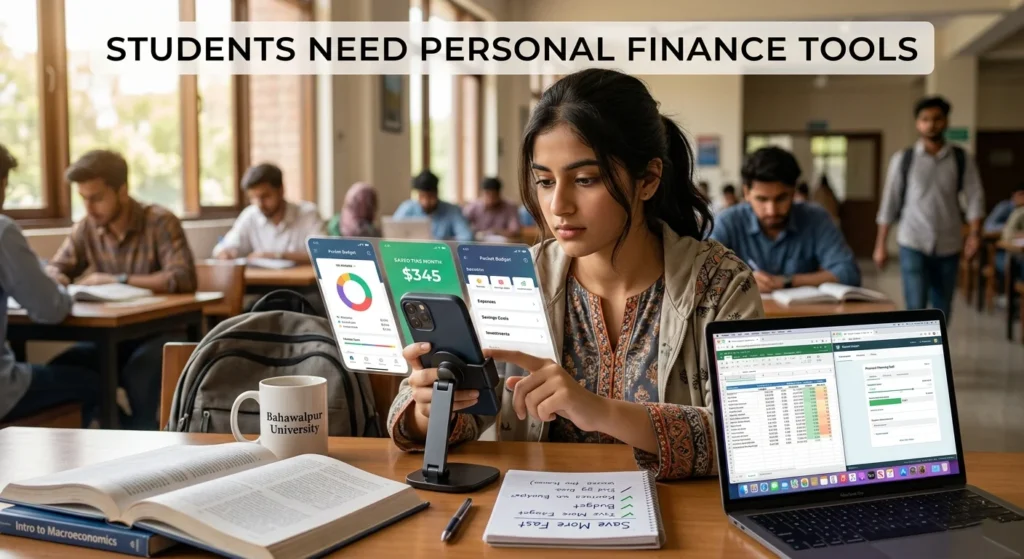
Student life often comes with limited income and unpredictable expenses. Some students rely on allowances from parents, while others manage part-time jobs, freelance work, scholarships, or student loans.
Without proper budgeting, money can disappear quickly.
Limited Monthly Income
Most students operate with tight budgets. Unlike full-time professionals, students usually have restricted earning opportunities while balancing studies and personal responsibilities.
A small financial mistake can create major stress near the end of the month.
Irregular Spending Habits
Student spending patterns are often inconsistent. One week may include restaurant visits, online shopping, rideshare costs, entertainment, and subscriptions.
Because many small expenses feel harmless individually, students often underestimate how much they spend overall.
Tuition and Loan Pressure
Tuition fees, books, transportation, accommodation, and educational supplies create continuous financial pressure. Students with loans also need to think about future repayment responsibilities.
Learning money management early can reduce long-term financial stress.
Difficulty Tracking Small Daily Expenses
Daily purchases like coffee, snacks, gaming purchases, or delivery apps may seem minor. However, these small expenses can quietly consume hundreds of dollars every month.
Research and financial experts consistently show that budgeting apps improve spending awareness and help users make smarter financial decisions. When students clearly see where money goes, they naturally become more careful with spending.
What Are Personal Finance Tools?
Personal finance tools are digital solutions designed to help people manage money more effectively. These tools help users:
- Track expenses
- Create budgets
- Monitor savings
- Set financial goals
- Analyze spending habits
- Plan future finances
For students, finance tools simplify money management without requiring advanced financial knowledge.
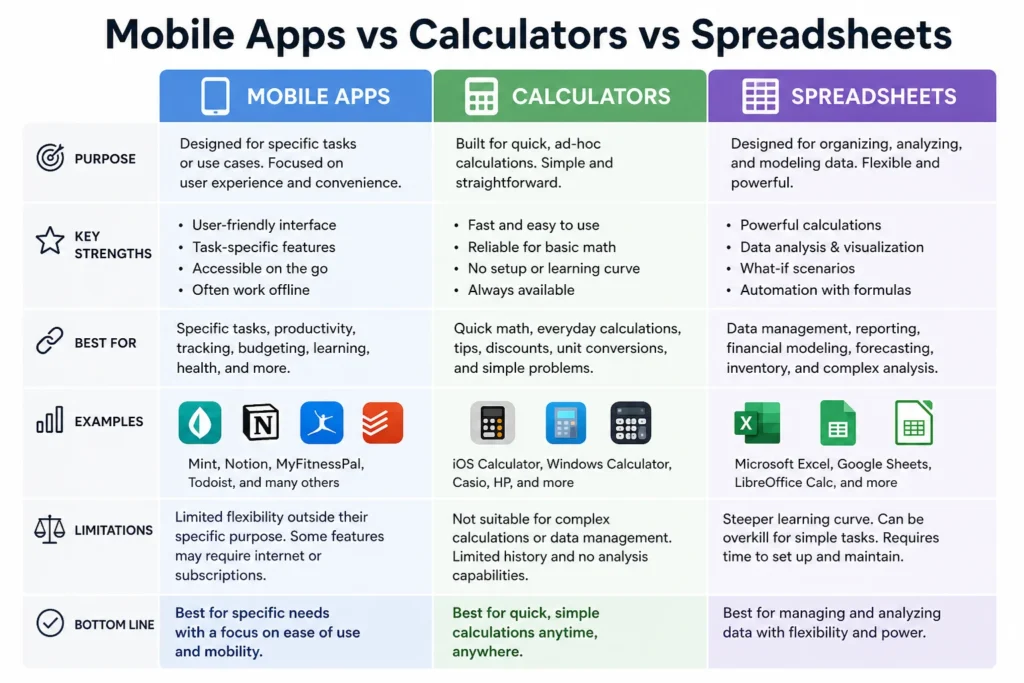
Mobile Apps vs Calculators vs Spreadsheets
Mobile Apps
Budgeting apps automatically organize expenses, monitor subscriptions, and provide spending insights.
Examples include:
- YNAB
- Rocket Money
- PocketGuard
Financial Calculators
Online calculators help students estimate savings, loan payments, monthly budgets, or future financial goals.
For example, tools available on My Calcly can help students calculate savings targets, split bills, and manage everyday financial planning more easily.
Spreadsheets
Some students still prefer spreadsheets for manual budgeting. While spreadsheets offer flexibility, they require more effort and discipline.
Why Digital Finance Tools Work Better for Students
Digital tools reduce manual work and make budgeting easier to maintain consistently.
Students benefit from:
- Automatic expense tracking
- Real-time financial insights
- Spending alerts
- Visual reports
- Goal tracking systems
Most importantly, finance tools make students more aware of their spending behavior.
Types of Personal Finance Tools for Students
Different students have different financial needs. Some need budgeting support, while others want savings guidance or expense tracking.
Here are the most useful categories of finance tools for students.
Budgeting Apps
Budgeting apps help students plan monthly spending and avoid overspending.
These apps typically allow users to:
- Set spending categories
- Create financial goals
- Monitor account balances
- Receive alerts when spending exceeds limits
Budgeting apps are especially useful for students trying to improve financial discipline.
Savings Calculators
Savings calculators estimate how much money students can save over time.
These tools help students:
- Set realistic savings goals
- Understand compound growth
- Plan emergency funds
- Track monthly progress
Students using tools from My Calcly can quickly estimate future savings and understand how small monthly contributions grow over time.
Expense Trackers
Expense tracking tools show exactly where money goes each day.
Students often discover hidden spending patterns after tracking expenses consistently for a few weeks.
Expense trackers improve financial awareness and reduce impulsive spending.
Bill Split Tools
Many students live with roommates or share expenses with friends.
Bill split calculators simplify:
- Rent sharing
- Utility payments
- Food expenses
- Group travel costs
Instead of manual calculations, bill split tools ensure fair and accurate payment distribution.
Investment and Finance Apps
Some students want to learn long-term financial management early.
Investment apps teach:
- Basic investing
- Financial literacy
- Portfolio management
- Wealth-building habits
While beginners should focus on budgeting first, learning financial fundamentals early can be highly beneficial.
Best Personal Finance Tools for Students
Choosing the right finance tool depends on your goals, budgeting style, and financial experience.
Below are some of the best personal finance tools for students.
YNAB — Best for Serious Budgeting
YNAB is one of the most respected budgeting systems available today.
The platform follows a zero-based budgeting method where every dollar is assigned a specific purpose.
Key Features
- Zero-based budgeting
- Goal tracking
- Spending categories
- Financial planning tools
- Budget forecasting
Why Students Like It
Students who struggle with overspending often find YNAB extremely effective because it creates intentional spending habits.
It helps users:
- Control impulsive purchases
- Build emergency savings
- Plan monthly expenses carefully
Potential Drawback
YNAB requires consistent involvement. Students who dislike active budgeting may initially find it demanding.
However, many financial experts consider it one of the strongest systems for developing long-term money discipline.
Rocket Money Best for Subscription Tracking
Rocket Money helps students identify unnecessary spending and forgotten subscriptions.
Key Features
- Subscription tracking
- Spending alerts
- Budget monitoring
- Expense categorization
Why Students Like It
Many students accidentally waste money on unused subscriptions.
Rocket Money helps users quickly identify:
- Streaming services
- Gaming memberships
- Music subscriptions
- Recurring payments
Its beginner-friendly interface makes it easy for students new to budgeting.
Recent user reviews frequently praise the app for improving spending awareness and helping reduce hidden expenses.
PocketGuard Best for Simple Expense Tracking
PocketGuard focuses on simplicity and spending awareness.
Key Features
- “Safe to spend” feature
- Expense summaries
- Bill monitoring
- Budget recommendations
Why Students Like It
Students often prefer simple tools instead of overly complicated financial systems.
PocketGuard helps users understand:
- How much money remains after bills
- Which categories consume the most money
- When overspending occurs
It reduces confusion and improves budgeting confidence.
Wallet by BudgetBakers Best for Cash Flow Monitoring
Wallet by BudgetBakers is popular for its visual budgeting approach.
Key Features
- Bank syncing
- Financial insights
- Spending reports
- Budget planning
Why Students Like It
Visual charts and spending summaries make financial management easier to understand.
Students can quickly identify:
- Spending trends
- High-expense categories
- Monthly cash flow patterns
Financial reviewers consistently rank Wallet highly for expense tracking and budgeting analysis.
EveryDollar Best for Monthly Budget Planning
EveryDollar focuses on straightforward monthly budgeting.
Key Features
- Monthly budget templates
- Goal-focused planning
- Expense categories
- Budget organization
Why Students Like It
Students appreciate its clean and simple layout.
The app encourages:
- Intentional spending
- Organized budgeting
- Better monthly planning
It works well for students who prefer structure without complexity.
Monarch Money Best for Advanced Financial Tracking
Monarch Money is designed for deeper financial planning.
Key Features
- Investment tracking
- Net worth monitoring
- Shared budgeting
- Long-term planning tools
Why Students Like It
Although more advanced, Monarch Money is useful for students preparing for long-term financial goals after graduation.
It supports:
- Wealth tracking
- Financial organization
- Long-term savings planning
Comparison Table
| Tool | Best For | Beginner Friendly | Free Version | Main Benefit |
|---|---|---|---|---|
| YNAB | Serious budgeting | Medium | Trial only | Strong money discipline |
| Rocket Money | Subscription tracking | Yes | Yes | Reduces hidden expenses |
| PocketGuard | Simple budgeting | Yes | Yes | Prevents overspending |
| Wallet | Expense tracking | Yes | Yes | Visual financial reports |
| EveryDollar | Monthly budgeting | Yes | Limited | Better spending planning |
| Monarch Money | Advanced tracking | Medium | Trial | Long-term financial planning |
Real-Life Examples of Student Savings
Real-world examples help students understand how small financial improvements create meaningful savings.
Example 1: Coffee Spending
A student buying coffee daily spends:
- $5 per day
- Around $150 per month
- Approximately $1,800 per year
Expense tracking apps often reveal these hidden spending habits quickly.
After tracking expenses, many students choose:
- Home coffee alternatives
- Weekly spending limits
- Reduced café visits
Small changes create significant long-term savings.
Example 2: Subscription Savings
A student discovered several unused subscriptions:
- Netflix
- Music service
- Gaming membership
Total unnecessary spending:
- Around $40 monthly
After canceling unused subscriptions, the student redirected savings toward emergency funds.
Example 3: Monthly Savings Goals
A student earning $500 monthly used a budgeting app to follow the 20% savings rule.
Monthly savings target:
- $100
After several months, the student built an emergency fund for transportation and academic expenses.
Savings calculators available on My Calcly can help students estimate how consistent monthly savings grow over time.
Example 4: Splitting Shared Expenses
Four roommates sharing utilities faced repeated payment confusion.
Monthly utility bill:
- $200
Using a bill split calculator:
- Each roommate paid $50 accurately
Bill split tools reduce misunderstandings and improve shared financial management.
Real Case Studies
Case Study 1: Escaping Paycheck-to-Paycheck Stress
A university student living away from home constantly ran out of money before month-end.
Problems
- Frequent food delivery spending
- No savings
- Poor expense tracking
- Financial stress
The student began using:
- PocketGuard
- Savings calculators
- Budget tracking tools
Results After 3 Months
- Reduced unnecessary spending by 30%
- Started saving $100 monthly
- Built emergency savings
Outcome
The student experienced:
- Reduced financial anxiety
- Better budgeting control
- Improved spending awareness
Case Study 2: Freelancer Managing Irregular Income
A design student earning freelance income struggled with inconsistent monthly earnings.
Challenges
- Income varied every month
- Overspending during high-income periods
- No emergency savings
The student adopted:
- YNAB
- Expense tracking systems
- Spending limits
Results
- Every dollar received a purpose
- Savings became consistent
- Overspending decreased
Outcome
The student eventually saved enough money to purchase a new laptop without debt.
Community discussions about budgeting systems often highlight how structured spending improves long-term financial discipline.
Case Study 3: International Student Managing Living Costs
An international student faced:
- Currency conversion confusion
- High rent costs
- Shared expense difficulties
The student started using:
- Budget tracking apps
- Currency converters
- Bill split calculators
Results After 6 Months
- Predictable monthly budgeting
- Easier shared payments
- Reduced money-related stress
Outcome
The student improved financial stability and avoided unnecessary debt.
Best Money-Saving Tips for Students
Finance tools are most effective when combined with smart financial habits.
Follow the 50/30/20 Rule
This budgeting method divides income into:
- 50% needs
- 30% wants
- 20% savings
It creates balanced financial management without extreme restrictions.
Track Small Expenses
Small purchases often become major monthly expenses.
Students should monitor:
- Coffee spending
- Snacks
- Delivery apps
- Online shopping
- Digital subscriptions
Expense awareness naturally improves budgeting behavior.
Avoid Impulse Buying
Waiting before purchasing non-essential items reduces emotional spending.
Many students benefit from using:
- 24-hour purchase rules
- Wishlist systems
- Monthly spending caps
Automate Savings
Automatic savings transfers improve consistency.
Even small automatic transfers help students:
- Build emergency funds
- Develop saving habits
- Improve financial stability
Common Financial Mistakes Students Make
Understanding financial mistakes helps students avoid future problems.
Ignoring Budgeting
Without budgeting, money management becomes unpredictable.
Overspending on Food Delivery
Frequent delivery spending quietly consumes large portions of student budgets.
Keeping Unused Subscriptions
Many students forget recurring payments that continue draining money monthly.
Not Saving for Emergencies
Unexpected costs like medical expenses, textbooks, or transportation problems can create serious stress without emergency savings.
How to Choose the Right Finance Tool
Different tools work better for different financial personalities.
Best for Beginners
- PocketGuard
- Rocket Money
These apps focus on simplicity and spending awareness.
Best for Serious Budgeting
- YNAB
Ideal for students wanting stronger financial discipline.
Best for Visual Reports
- Wallet by BudgetBakers
Excellent for understanding spending patterns visually.
Best for Long-Term Financial Planning
- Monarch Money
Useful for students preparing for future financial goals.
Why Students Should Start Financial Planning Early
Building financial habits during student life creates long-term advantages.
Students who learn budgeting early often:
- Avoid debt problems
- Reduce financial stress
- Improve future financial stability
- Build healthier spending habits
Financial discipline developed during college years can positively impact adulthood for decades.
Why Use My Calcly Finance Tools
My Calcly offers beginner-friendly financial calculators designed to simplify money management.
Students can use these tools for:
- Savings planning
- Bill splitting
- Budget calculations
- Financial goal tracking
Benefits include:
- Fast calculations
- Easy-to-use interface
- Free online access
- Practical budgeting support
For students who want quick and simple financial tools without complexity, My Calcly provides accessible solutions for everyday financial planning.
Frequently Asked Questions?
What is the best finance app for students?
The best finance app depends on personal goals. YNAB is excellent for serious budgeting, while PocketGuard and Rocket Money are ideal for beginners.
Can budgeting apps really save money?
Yes. Budgeting apps improve spending awareness, help reduce unnecessary expenses, and support better financial decisions.
Are free finance apps good enough?
Many free budgeting apps provide excellent features for students, including expense tracking, budgeting, and savings tools.
Why should students track expenses?
Tracking expenses helps students understand spending habits, avoid overspending, and reduce financial stress.
Final Thoughts
Managing money as a student can feel overwhelming, especially when balancing education, living expenses, and limited income. However, the right personal finance tools make budgeting far easier and more manageable.
Whether you need help controlling daily spending, saving for emergencies, tracking subscriptions, or planning long-term finances, budgeting apps and calculators can provide valuable support.
The key is consistency.
Even small financial improvements made during student life can create long-term financial stability in the future.
By combining smart budgeting habits with helpful tools like YNAB, PocketGuard, Rocket Money, and the finance calculators available on My Calcly, students can build healthier financial habits, reduce stress, and save money more effectively over time.